Monday, October 13, 2014

Dance as science and way of life

Exploring movement mechanics and different cultures 


Christina has been involved in the dance field many years now, by perfotming and studying as well as conducting research in movement mechanincs. 
After Greece and London, she now lives in Amsterdam, building up on her own movement methods and doing sessions for dancers, athletes and amateurs. 


by Aqvilon


Name:   Christina Mastori
Age:      24
From:   Athens, Greece
To:       Amsterdam, the Netherlands
For:      Movement & Bodywork workshops and sessions


1. Your basic education and interest.

With dance and movement exploration being my paramount interest I studied Dance, Sports and Exercise Science at Roehampton university in London, UK with a focus on performance biomechanics and injury prevention training.

I continued my studies with a masters in Dance Science, from Trinity Laban conservatoire of Music & Dance in London,UK where I focused on Neuroscience, Somatics & Physiology.


2. You and dance. The start and the development of this relationship. 

I started training in classical ballet from my early childhood and it didn’t take long for me to start exploring contemporary dance techniques as well.
At the university I concentrated in a partnering dance form called Contact Improvisation where touch and physical laws such as gravity, momentum,inertia, etc are the main principles.
As it happens frequently with dancers, I had a number of injuries that prevented me from dancing for extended periods of time. For that reason I decided to study the mechanics of movement and explore the variety of possibilities that the human body offers.


3. London. How long did you stay and what did you do. 

I was born in London, therefore my connection with the city was already strong. But during my adult years I stayed there for 4.5 adventurous years. I studied, met people, generally enjoyed myself to the fullest and it definitely re-shaped my point of view for the world.


4. The most important thing you took from London. 

The feeling of being able to be yourself and express your ideas and opinions freely. Individuality is always strongly encouraged!

by Aqvilon

5. Amsterdam. The most exciting thing about it.

A very multi-cultural city I would say. You have the chance to meet people from numerous parts of the world. Share your ideas and even some traditions. After spending some time here you have a small but useful knowledge of more than 4 languages that you normally wouldn’t learn, in any other case.


6. Your motivation to change city once again. 

Connecting with people and experiencing different cultures. Opening yourself to new possibilities.


7. What do you try for in this city.  Or what do you do. 


I have recently started my own practice and I am collaborating and sharing the space with an Art Healer.
 I am teaching body awareness and movement refinement through bodywork and movement sessions. I also offer a kinetic training and biomechanics programme designed for athletes and dancers that want to understand their bodies and enhance their exercise performance.


8. How would you like to personally contribute in the dance sphere and the human-dance interaction.

I am interested in assisting people re-connecting with their bodies, re-gaining balance and control while moving more ergonomically. It is very fascinating to see people exploring their movement possibilities through personal expressive dance.


9. Your greatest achievement so far.  Or the most intense memory.

I could consider an achievement being able to follow my dreams and interests while traveling and exploring multiple parts of our world. But I would definitely not take the whole credit for it.
Almost every memory on stage is intense for me. Performing is a strong mental and physical experience that activates your survival instincts.


10. In what way dance may have cure dynamics? 

When you are dancing it’s because you are eager to move. It’s a creative act which engages you in a number of ways; physically, emotionally, instinctively,etc. Therefore, dance could be considered more of a holistic approach than any other kind of physical therapy, in the form of exercise repetitions. Moreover, when you are dancing you become aware of your movement possibilities and limitations. You pay more attention on how your body feels and you become more able to identify problematic areas that cause discomfort and tension. This is happening for the simple reason of exploring your movement potentials and enriching your movement “vocabulary”.


11. Have you developed your own methods?

Yes. During my masters degree I started developing a neuro-movement programme based on the effects of touch and sensory awareness called Somanatomics. In my practice the main focus is given on the feedback that you receive from your body when you move. In order to get rid of all the habitual patterns that may cause discomfort in your every day and stop you from experiencing your life fully. We develop these habits in order to cope with the fast pace of our lives and we end up using our bodies automatically. We wake up, change our clothes, brush our teeth and walk to work in the same way everyday. With bodywork and movement sessions you retrain your mind to control the muscle activity, consciously engage and relax muscles. To achieve this you will have to learn how to take a step back, observe yourself and understand the signals you receive from your body.


12. Artists and situations that inspire you. 

I will say that most of the dancers,athletes that I have met have inspired me. Due to their strong will, athletic excellence, their discipline and achieving effortless visual results while being in serious physical strain. I would say that Sylvie Guillem has definitely raised my expectations for dance performance and Pina Bausch has planted a seed for individual expression and pushing my physical and mental limits further.
Thomas Hanna and his revolutionary work in the Somatics field have also been a major influence and inspiration for my work.
And I find the neuroscience findings and applications thrilling and they have proven to be a great impetus for me.


13. The most difficult thing to get used to in the Netherlands.

That would be the lack of delicious vegetables and fruits, but that is an expectation you give up when you leave Greece!
Another difficult thing to get used to would be considering as “the sea” any kind of dark coloured water.


14. Where do you see yourself in the future. 

Not easy to say. I would like to keep experiencing new cultures and keep my possibilities open.


15. Your personal definition of “home”

Home is anywhere I feel comfortable, happy and I am able to do the things that I love. A place that challenges me and offers me new experiences.

Tuesday, April 29, 2014

Erasmus in Spain

Castellón de la Plana, Valencia, Spain


Jrisa was looking forward to going for Erasmus abroad, some years now. She took the opportunity to live alone for the first time and create a little new life before she goes back in Greece. 
Here are her impressions and pictures. And God save the Erasmus.


Name:     Jrisa Kommata
Age:        21
From:      Piraeus, Athens
To:         Castellón de la Plana,     Valencia, Spain
For:        6 months Erasmus  in Universidad Jaime I


1. Which were your top options and why you chose Castellón de la Plana?

All my options were in Spain because I've started studying Spanish and I really liked it. My first options were Sevilla and then Granada. Castellón I didn´t knew it before I come here and I chose it since I wasn´t accepted by first choices... But finally I think that I made the right choice.

Tarragona


2. Your motivation for following the Erasmus program.

I wanted to follow the erasmus program even before I got in the university.  I think that is a very good oportunity to meet new people, “discover” yourself, new cultures, learn new things and exercise the languages you know.


3. The first difficulties.

The first 3 weeks, maybe month, it was really difficult. Fortunately, I wasn't alone. I had met in Greece two more girls going to the same city, we just went for a coffee and booked the plane tickets together. I traveled with one of them and the first four nights we stayed in a hotel. The days after, we were searching for a home and we found one, not so close to the university, but in the centre. In the begging we were living with the guys from the previous semester for about one week. 
It was quite difficult for me, because back in Greece I live with my parents and here I had to organise everything about the house and also about the money, by myself. But as the days were passing the things were getting better. Regarding socialization, things were very easy. The guys that we were living together for a little, helped us a lot and we also met some Greek guys who also helped us to get used to the language, as well.


4. Your house. What do you see from your window?

Well, from my window I don't see anything interesting. Only the opposite apartment. But the house is really comfortable and the living room has 2 big windows, so it's very bright. This is what I like the most.


5. Your academic field and basic interest.

In Greece I study Social Anthropology, but here I study history and philosophy.

Spanish night

6. Your impression of the university.

The university is really good. There are buildings for each department separately, plus the building of the library and another one for sports. Also, the lessons are very good and the professors very helpful with us!


7. The food. 


The food here is really perfect! Paella (rice with barbecue meat or vegetables) is their traditional plate and I really like it.They have  some cheeses and jamón, which are a kind of cold cuts. They have also seafood, potatoes (patatas bravas) which has a sause (ali oli) with garlic and olive and the tortilla which is like our omelette. 


8. The people of the city.

The spanish people are very kind, they will help you with whatever you might ask and they are always happy! There is only one problem, the language. Most of them they don't speak English so you have to speak Spanish to communicate with them and this was a big problem the first days here.

Spanish men playing Greek rempetiko

9. Erasmus people.

The majorities of the erasmus people are French and German. There are people from everywhere
(France, German, Italy, Poland, Slovenia, Finland, Turkey, America and Latin America, Austria, Australia).
Most of our friends are from the erasmus programme, not natives.


10. The best and the worst thing about the city.

The best thing about the city is that is a small city and you don't need to use the means of transport, but because of that, sometimes you don't have so many choices of doing new things.


11. A Spanish habit you have almost adapted.

Spanish people, wherever they go out for a long time, they have  a home-made sandwich to eat with them (bocadillo). I think that this is the Spanish habit I have adopted here.


12. How do you see young Spanish people face the economic crisis.

I think that the young Spanish people is like the young Greek people. Of course they are worried for all this situation, but they don't debilitate and they are trying to have fun, even they don't have enough money. I'd also add here that the life here,generally, is cheaper than Greece.


13. The most important thing you have gained from this experience, so far.

Everything. The friends I have made, the places I've seen... 
I believe that this experience made me stronger about learning how to live alone.


14. Where do you see yourself in the future.

Travelling and healthy!


Monday, April 14, 2014

University books and tennis rackets

Athlete and student in USA


At the age of 18, Eleanna left her country to go to the US for studies. A young tennis player, always attracted by challenge, shares views and experience about her new start.


Name: Eleanna Fulop 
Age: 18 
From: Athens, Greece 
To: Springfield, MA 
Purpose: Studies and tennis training


1. Your life before leaving for the USA.

Before leaving for the US, I was still in school and played tennis on a championship level. I wanted to leave and thus considered the US a very important opportunity for my life. The US is the only country where you can combine studying and doing your sport on a good level. Namely, to keep improving in the sport you have been doing many years on a competitive level and study at the same time. Moreover, it’s a country that provides scholarships to athletes. This is a basic reason I chose to come here. I had the possibility to choose among several universities offering a scholarship for me to study in the US and play in the tennis team. 


2. The first days there.

Emotions were mixed during the first days. First of all, I felt sorrow and insecurity because I left my family, my friends, and my boyfriend behind, but simultaneously, I felt excited about such a big change. I was anxious whether I’d be able to do everything on my own but also very eager to cope with this great challenge that “landed on my doorstep”. During the first days, for about 2 weeks, my mother was luckily with me and this helped me a bit since I didn’t have to swim through deep water right away. But as soon as she left, it was rather very hard for me to get used to both her absence and the absence of the rest of my family that I would get to see after 4 months.
When it comes to accommodation, I didn’t need to look for a place. I reside in university premises and this was included in the scholarship I received.

3. Your daily life…

Every morning, I have lectures that I am required to attend, then there’s a small break to eat, rest and Skype with people, and later at noon I have training until early afternoon. Some days it’s tennis training, while others it’s gymnastics. After I’m back from training, I eat and study. In the first semester, I used to watch matches of other sports in the university over the weekends, and sometimes I went out to dinner and shopping or to the gym. Now that the season is over for most sports, I get some more rest in the weekend. Our season is also about to begin so we will be travelling to matches in the weekends, thus I don’t think I will have much free time to do things.


4. You and tennis. What does it mean to you and what is your biggest goal?

Tennis is a part of my life. I cannot imagine my life without it. I love it very much and I don’t believe I will ever quit playing. By no means am I pursuing a professional level, but I continue training hard on a championship level. I want to improve more and more every day and reach my limits. I enjoy hard training and prefer it over a match. I can be in the court playing tennis for hours on end.

5. What’s the thing you like the most in Springfield?

I would say that Springfield is a weird area. Even though it’s one of the biggest cities in Massachusetts and full of universities, there aren’t so many things to do there and, as most American cities, it is unsafe. I have not discovered the thing I like the most about Springfield. I guess I could say that I get very excited by the fact that I see little squirrels around the campus as if they were pigeons in Athens. This could be the thing I like the most after all!


6. What was the toughest thing to get used to?

I would say that the toughest thing to get used to was the absence of the people I love from my daily life. I was, and still am, very close to my family so it was very hard to get used to their absence. Even now, after 5 and a half months of being here alone, there are times when I cannot realize that I don’t see them daily; that they are so many miles away from me and I cannot see them no matter how much I want to. I had to wait until Christmas and now I have to wait until May when I complete the first year to go back and see them. 


7. Your favorite new habit or routine?

My favorite routine is my lessons. I am really excited about them and I think they’re very interesting. Plus, the fact that they are not in my native language makes it even more challenging to cope with them.   


8. What is it you see from your window?

Unfortunately, I live in the basement so I see the grass. There’s also a bush right outside my window but I also see the lower part of a building right across. Ok it’s not that bad… I don’t mind much.


Boston
9. Your favorite place in the city?

It’s a restaurant with very good Italian food. The US is not particularly popular for its nice and healthy food; hence the food served in the university isn’t the best quality. And since I am forced to eat it every day, a good meal will be something very exciting. Thus a restaurant with good food will become the favorite place in the city. 


10. Which are the most beautiful places you’ve seen so far in the US?

I think Boston is one of the most beautiful places in the US. It’s lovely! I was really excited and enjoyed it very much. It’s a place I could live in. Also, New York. Even though it’s a very boisterous city with so many people, it is really impressive on the first visit. Personally, I think you cannot live there for a long time. Boston is much better. 


New York


11. What do you miss the most?

What I miss the most is my family and my boyfriend. It’s very hard to get used to living away from those you love. But for better or worse, you need to make sacrifices in life and show the strength you have inside.


12. What are your thoughts about going back to Greece?

I haven’t thought about it yet. Whether I’ll go back to Greece or not… Time will show...


13. What is your biggest dream in life?

Tough question… Definitely, one of my dreams is to succeed in completing my studies and then do a master’s, somewhere in Europe perhaps. But I still don’t know what my biggest dream is…

Thursday, February 20, 2014

Experiencing Indonesia

 Exploring another continent's Agriculture


One of the most important thing that one can experience, is living in a cultural context of harmony with nature and getting inspiration from it. Alexandra traveled to Indonesia to conduct research in her academic field, by the fields of Indonesian villagers.


Name:  Alexandra Mitsiou
Age:     28
From:   Athens, Greece
Trip started from: The Netherlands
To:      Indonesia
For:     Research


1. Your motivation to go abroad.

"I love traveling and this was a great opportunity to combine it with my studies."


2. How did you choose Indonesia?

"The choice was mainly directed from the research opportunities offered by my masters which was focused on the tropics but also from personal choice and the fact that I was curious to visit and explore this part of the globe."


3. What did you do there? For how long?

"I went there for 3 months to do a socio-economic research on the impacts of oil palm cultivation on the forest and the local communities in Kutai Barat district."


4. Your basic interest and background.

"My background is a MSc in Environmental Biology and my basic interest is in the field of sustainability with special focus in sustainable agriculture and food production."


5. The region you stayed.

"My base was Barong Tongkok at Kutai Barat district in East Kalimantan but I also visited for a few days Jakarta and Samarinda."


6. The best thing about the city.

"There is nothing exciting about Barong Tongkok that I could mention. It was more of a research base close to the villages where I had to do my field work. However, there were really nice villages close by where you could dive directly into the ‘Dayak’ lifestyle!"


Typical Dayak hut

7. The people.


"Indonesia is a very diverse country in terms of religion and cultural background, thus depending on where you are, which island or which region you visit, you get a different social experience. 
In general, I would say that people are very nice (sometimes too nice that they will never judge you or say that you are wrong); welcoming and excited to show you around and make you feel at home. 
The region where I was based is home of the ‘Dayak’ people and it was very fascinating to experience their cultural tradition, mentality and customs. They still have values about social bonds and nature that we in our western-minded society have forgotten or put aside as non-important or non-profitable. In their society, family is the principal institution that has to be protected, the elders are respected and considered as source of wisdom and nature is the vital resource to be protected and handed in ‘healthy’ to the next generation."


8. The food.


"A lot of rice and chilly! My favourite was the ‘sticky’ rice that is cooked with coconut milk in a bamboo stick…"


9. Indonesian nights out.


"If we are talking about drinking and partying depends on where you are; in a touristic place where everything is possible, a village where booze is non-affordable or in one of the big cities that are the best example of the dominant religion in Indonesia which is Islam. According to the ‘coran’ alcohol is illegal and consequently pretty expensive to get. However, in every big city you will find your ‘European paradise’ (usually an Irish pub). Other than that, good hang outs with nice people and friends it is an all-time possible."


10. Something people would not know about Indonesian culture.

"Again varies a lot by region but I would say something about Dayak people that the style of stretched ears was first launched by the Dayak women as an indication of power in their tribe."


11. Something you found difficult to get used to.


"The Muslim mentality and the fact that is not ‘right’ to expose your body as a woman even if we are talking about wearing short sleeves in the warm and humid Indonesian weather."


12. What you will keep forever form your Indonesian experience.

"The traditional Dayak ceremonies were a great experience to keep in memory. Moreover, the lifestyle of Dayak people in the villages, which makes you revaluate the western way of life, our priorities, goals and definition of happiness."


Friday, February 14, 2014

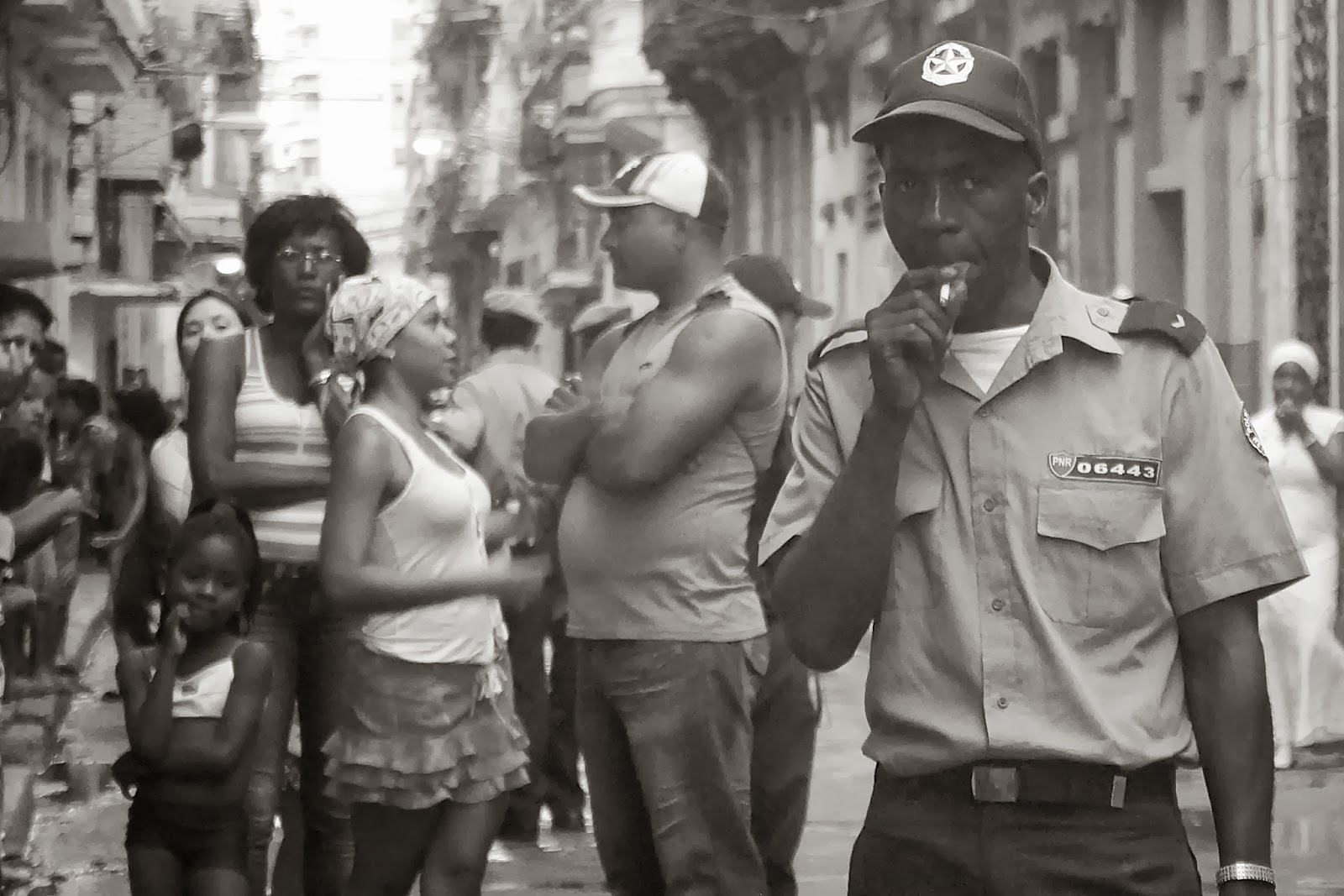
La Vida Cubana

 Researcher in Havana


Philippine is a typical example of the international type of person. Having roots from different countries and having traveled a lot, changing cities is very natural for her.


Name: Philippine
Age:    24
From:  Provence, France
To:      Havana, Cuba
For:    Research on urban agriculture and Latin-American cinema


1.      Your motivation to go to Cuba.

"Buena Vista Social Club, old cars and salsa, how original! Even before signing up for my master’s in the Netherlands I knew that I wanted to go to Cuba, so one of the first questions I asked the admission committee was whether it was possible to do research there during my first year. 
They said it might be possible, and I wrote to the Cuban embassy in the Netherlands, who after a few months responded that I could do research with a local university. 
I googled Cuba and sustainable development (as that is the topic of my master’s degree) and found out about the famous Cuban urban gardens. I decided to do my research on that and go explore the largest Caribbean island and all of its cultural highlights."


2.      Your basic academic interest.


"That’s always changing. I was always very interested in environmental protection, but then my interest grew wider, including social and political concerns, and eventually leading me to a mixture of engagement, media and arts. I got passionate about documentary filmmaking, and I decided to study sustainable development as a way to get a chance to investigate on the issues I would like to work on in a more creative way."
 

3.  What was research about?

"Last year, I focused my research on urban agriculture. This year I began a research on mobile cinemas in Latin America as a tool for social transformation. Two very different topics, but food and arts are both very important!"


4.  What you loved about Havana.

"Everything feels so different due to the peculiar geopolitical situation. Things seem to have got stuck in the past, which is usually a reason to despair for locals but makes the experience captivating for foreigners."


5.   The hardest thing to get used to.

"The excessive attention of people on the street was the hardest thing for me to get used to. Most people seem to imagine that any foreigner is a rich tourist who doesn’t speak Spanish or know anything about life on the island, and it was exhausting to have to explain things over and over again. Having no cell phone and very limited internet access was difficult at times, but it is also an interesting experience since one learns to live without much technology as we did in the good old times…"


6.  How was the place you stayed? 

"I split my time between Neptuno street in the center of Havana and a film school in the country-side. Havana was interesting but tiring for the aforementioned reasons. My last house in Havana had no electricity half the time and barely any windows, so we had a lot of romantic candle times. The film school was incredible, surrounded by palm trees and filled by young artists from all of South America and beyond!"


7. The best thing to do with company in Havana.

"Sitting at the end of the Malecón (the wall at the edge of the city facing the sea) on a warm night, listening to street musicians and watching large container ships pass by."


8.   Something special about the citizens.

"They have gone through a lot, so they are pretty strong and ingenious. Most people are cultivated, and no matter what they keep dancing, and even two years old children know how to move."


9.   The food.


"As much as I was traumatized by the culinary experiences of my first six months in Cuba (rice, beans and chicken every day and little opportunities to find better for acceptable prices), things are rapidly changing and I was pleasantly surprised on my second visit. There are now more imported products, and the introduction of private-run restaurants seems to be encouraging a little creativity in the cooking department."


10.  Something one would not imagine/know about Cuba.

"It can get down to 4 degrees in the winter!"


11.  A negative aspect of the country that you experienced or found out.

"The segregation between foreigners and locals. As a student I was allowed to take Cuban buses, but non-resident foreigners are obliged to pay much more for the same service on special tourist buses."


12. The best place you visited in Cuba.

"A little fishermen village at the eastern tip on the island called Nibujon, there was green grass around the houses and barely any commerce. A family invited us for dinner and showed us a wonderful place to camp on a hill near the sea."


Istanbul

13.  The best city you have ever visited in the world.

"I would say Amsterdam, Istanbul and Tbilisi. Don’t ask me to choose!"


14. Where you would like to settle down (if you’d ever chose to do so)…

"As much as I can’t chose my favourite city I would find it very hard to answer that question now. It is hard at times to be a foreigner everywhere, but I don’t imagine going back to where I came from. I’d like to be in a place with a dynamic alternative/artistic scene, so why not Buenos Aires!"


15. Your personal definition of “home”.


"Where I feel comfortable and alive."


16. Your tip or your warning about going to Cuba. 

"The value of local currencies, a convertible Cuban peso equals 25 cuban pesos, so don’t mistake the two!"


[ Photos by Philippine ]